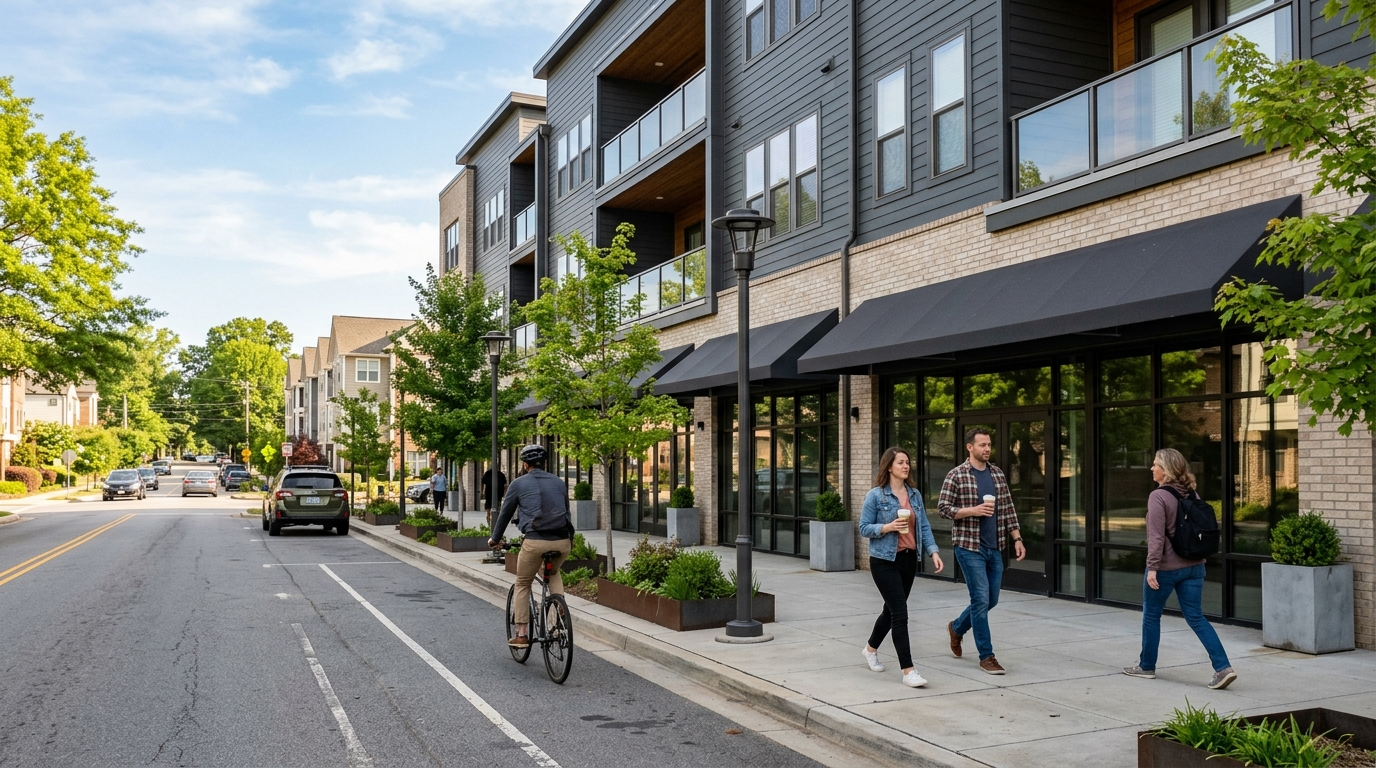
American homebuyers just put a number on walkability: 63 percent say they would pay more for a home in a neighborhood where shops, parks, and daily errands sit within a short walk. The willingness is broad, and the neighborhoods that can deliver the walk are scarce.
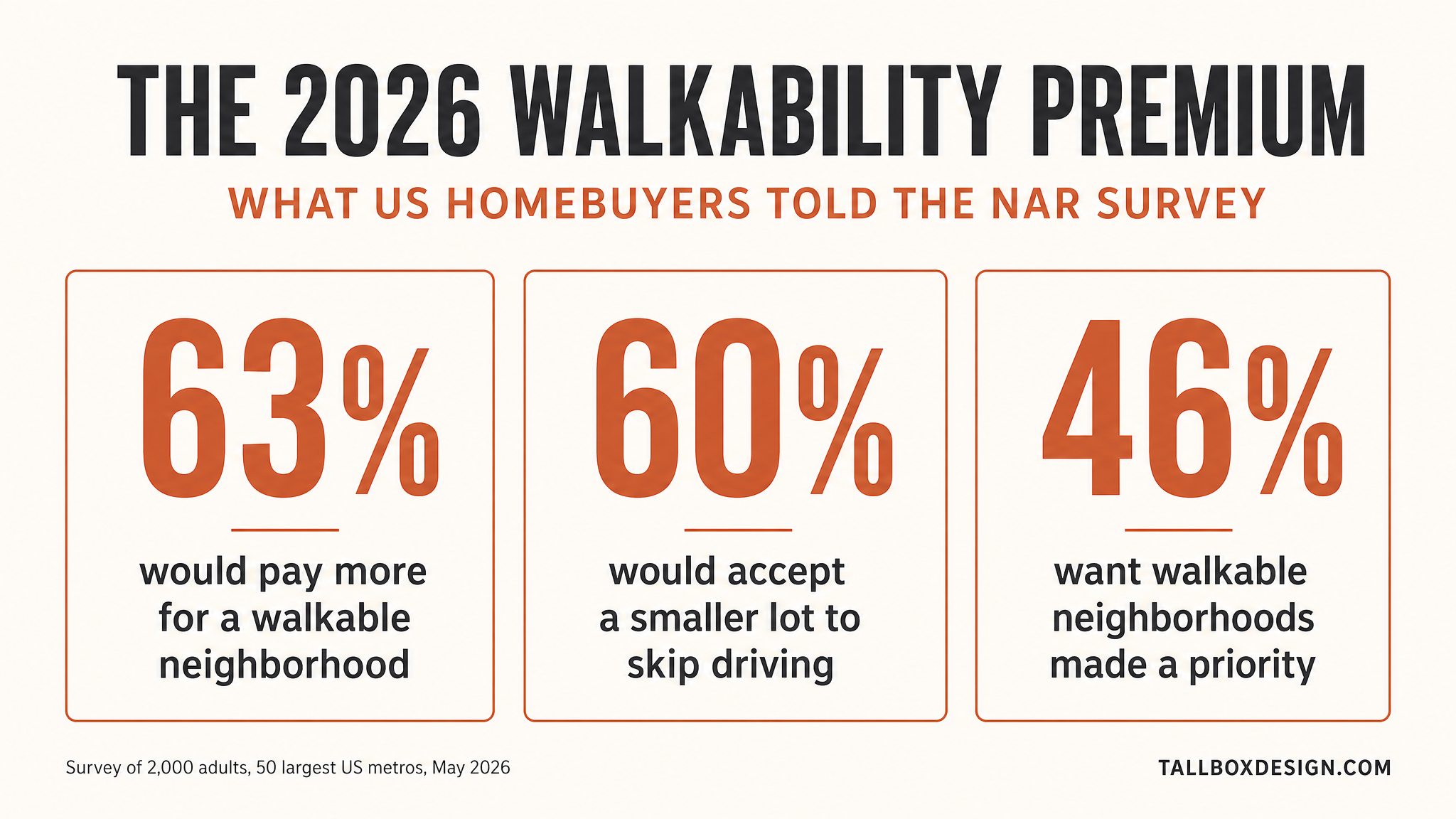
The 63 percent finding comes from the National Association of Realtors 2026 Community and Transportation Preferences Survey, a 2,000-adult poll across the 50 largest US metros (fielded in May, released July 9). NAR repeats the poll every three years, so the survey is the closest US housing comes to a long-term gauge of neighborhood demand.
What buyers told NAR about walkable neighborhoods
Walkability runs through the NAR results, and buyers back the stated preference with concrete trade-offs. Sixty-three percent of prospective buyers would pay more to live within an easy walk of shops, parks, and stores. Nearly 60 percent would take a smaller home or lot to skip driving to daily errands.
Buyer support extends to the housing types that walkable streets require. Respondents favored more small-lot single-family homes, townhomes, and duplexes in their communities. Forty-six percent said local governments should make walkable neighborhoods a high priority.
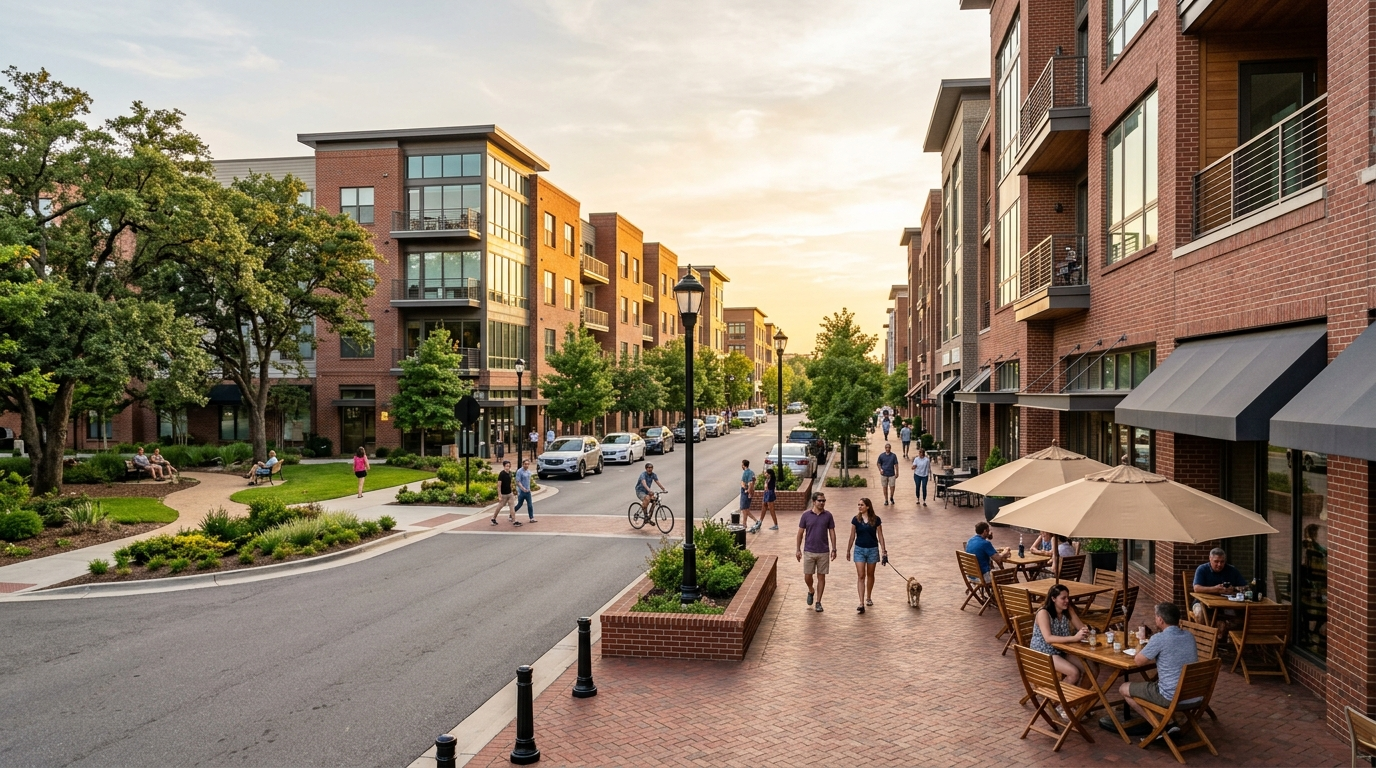
The walkability preference is about trips and time, not sidewalks for their own sake. A neighborhood where the coffee run, the school drop-off, and the park visit happen on foot removes dozens of weekly car trips. Buyers price that convenience like any other home feature.
The walkable enclaves that top Niche’s 2026 rankings
Buyer preference surfaces in the walkable enclaves Americans rate highest. Niche’s 2026 Best Places to Live rankings, released in March, crown small walkable communities inside major metros. Atlantic Station in Atlanta ranks first on the national list, with Colonial Village in Arlington, Virginia second.
Niche splits its lists in two: “places” covers neighborhoods, suburbs, and towns, while “cities” covers municipalities of 100,000 or more. The walkable-enclave pattern belongs to the places list, where many winners hold fewer than 15,000 residents.
Source: Niche 2026 Best Places to Live, released March 23, 2026. Niche scores 18,000 US locations on Census Bureau, labor, and public-health data plus millions of resident reviews.
Niche economist Allison Shrivastava reads the list as a jobs-plus-community equation. “People are increasingly looking for neighborhoods that offer both access to diverse career opportunities and a strong sense of community,” she said.
Why do walkable neighborhoods cost more?
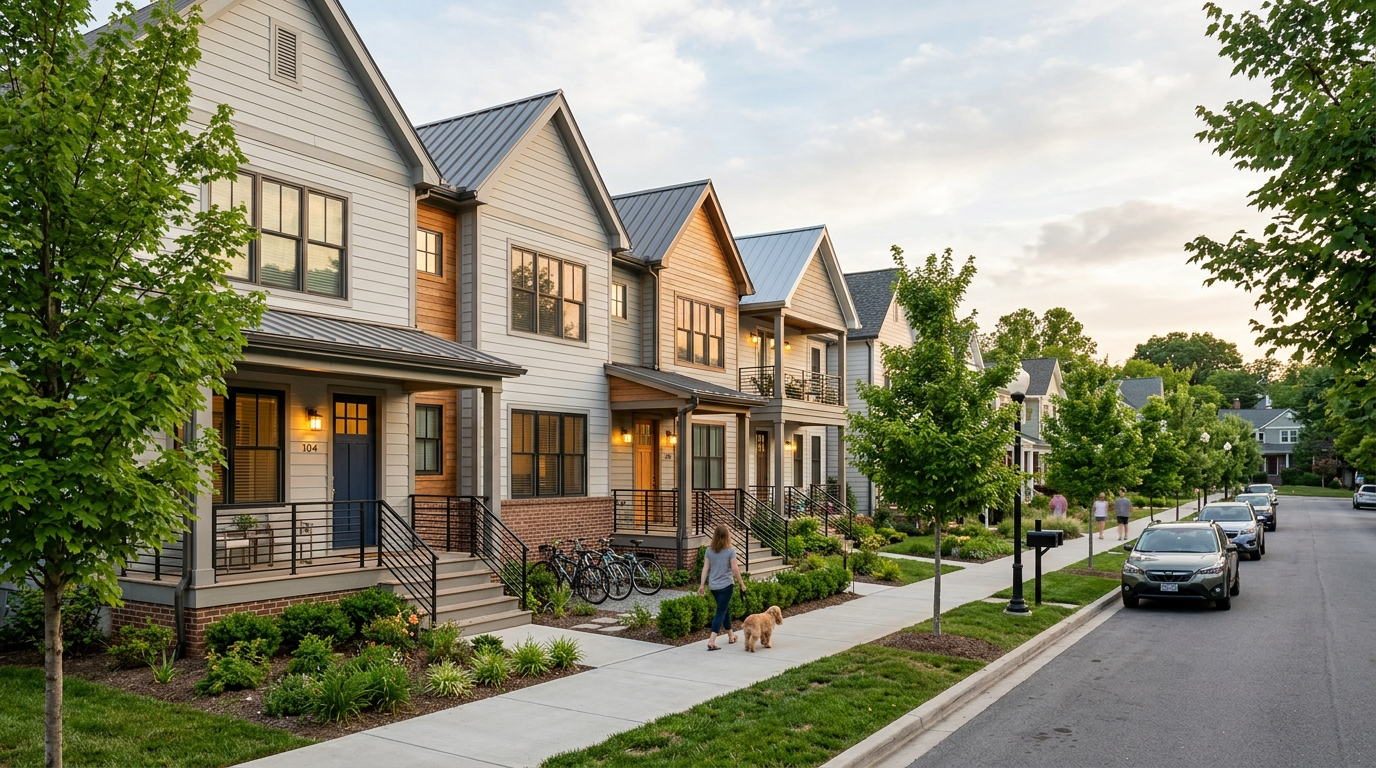
Walkable neighborhoods cost more because broad demand meets a tiny supply. Genuine walkability is a neighborhood-scale property: short blocks, continuous sidewalks, mixed-use streets, and everyday destinations within a five to ten minute walk. No single homeowner can add those features to a house, because they live in the street grid and the zoning map.
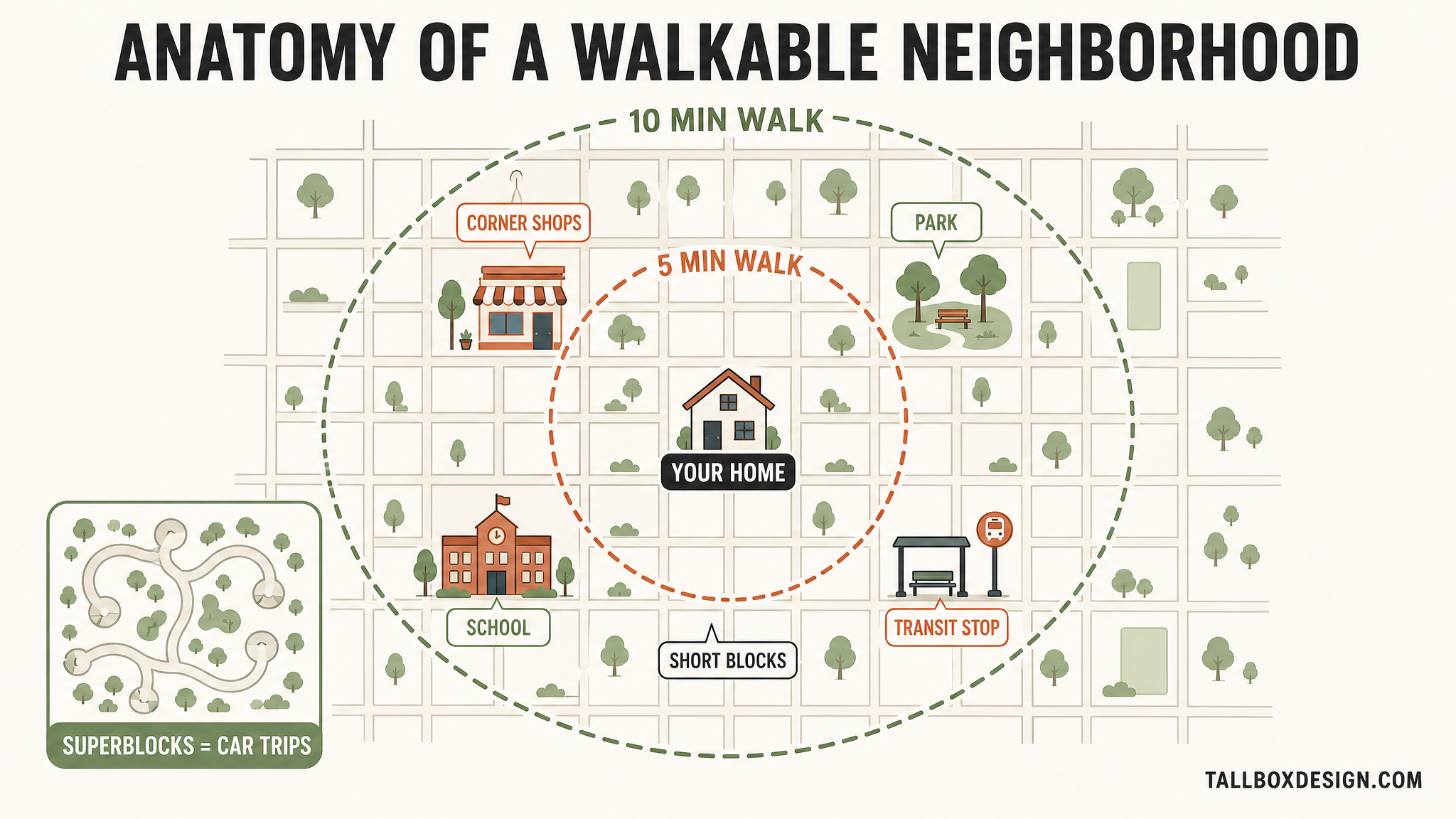
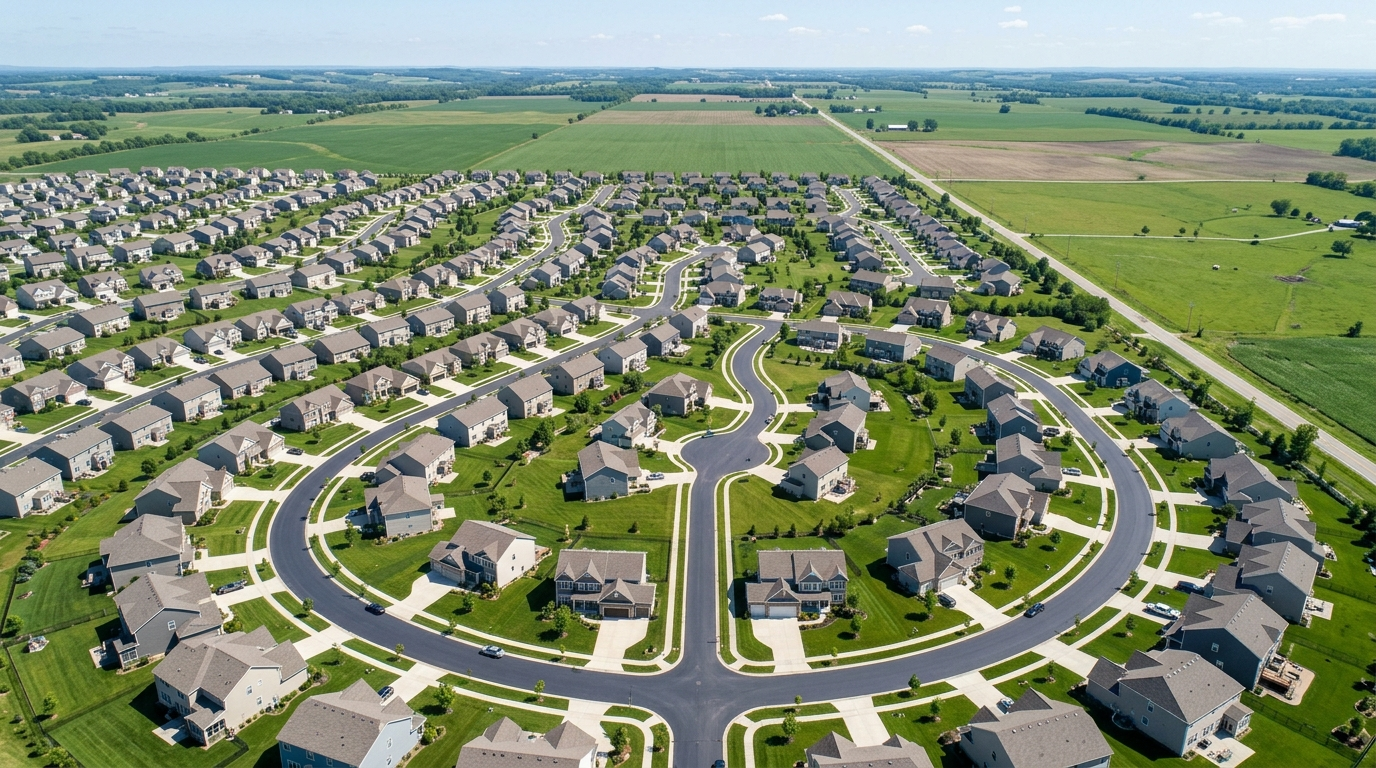
Most US residential land built after the 1950s was platted around driving, with long blocks, single-use zoning, and shops pushed out to arterial roads. The few neighborhoods that predate that pattern, or that were master-planned to break it, absorb an outsized share of buyer demand.
US population growth still flows away from walkable enclaves. Census estimates show the fastest-growing US places are exurban communities like Princeton and Fulshear in Texas, where land is cheap and building is fast; we broke down that boom in our exurb growth analysis. Preference points to walkability, but construction follows cheap land.
Walkable enclave or exurban square footage: the trade-off
The 2026 buyer’s real choice is rarely walkable versus not. It is a smaller home in a walkable enclave versus more square footage in a drive-everywhere exurb at the same budget. Each side wins on different terms.
Decision framework compiled from the NAR 2026 Community and Transportation Preferences Survey and US Census population estimates. Entries describe typical patterns, not quotes for a specific market.
An exurban buy pays off when the budget leads and inventory helps: builders are cutting prices and offering incentives on finished homes, a dynamic we covered in the new-home glut report. Buyers hold rare leverage in the 2026 market, which strengthens the bargain case.
New walkable districts face a selling problem the exurbs never have: their value sits at street scale, not room scale. Developers market them with aerial and streetscape visuals, the same masterplan renders our studio builds for architectural clients, because a floor plan cannot show a five minute walk.
How to test real walkability before you buy
Listings apply the word walkable to almost anything, so test the neighborhood on foot before you pay its premium. Five checks separate a genuinely walkable enclave from a marketing label.
- ✓Time the actual walk. Leave the front door and walk to groceries, coffee, and a park. Ten minutes or less on foot per stop is the practical bar.
- ✓Follow the sidewalks. One missing block or an uncrossable arterial road breaks the whole route, no matter what the distance says.
- ✓Count destinations, not distance. A walkable neighborhood needs a cluster of everyday stops (food, school, park, pharmacy) inside the five to ten minute radius, not one distant supermarket.
- ✓Read the blocks. Short blocks with frequent corners invite walking; superblocks and looping cul-de-sacs quietly force the car.
- ✓Return after 6 pm and on a weekend. Shops that close early and streets that empty out mark the neighborhood’s walkability as a daytime label, not a lifestyle.
Walkable neighborhood questions buyers ask
QWhat counts as a walkable neighborhood?
A walkable neighborhood clusters daily destinations (shops, parks, school, transit) within an easy walk on continuous sidewalks. Short blocks and mixed-use streets are the physical markers, and the NAR survey framed it as shops, parks, and stores within easy walking distance.
QDo buyers really pay more for walkable neighborhoods?
Yes, by stated preference: 63 percent of prospective buyers in NAR’s 2026 survey said they would pay more for a walkable community, and nearly 60 percent would accept a smaller lot to get one. The survey measures willingness, not closed sale prices.
QWhich US places ranked best to live in 2026?
Niche’s 2026 list leads with Atlantic Station in Atlanta, Colonial Village in Arlington, Evergreen Park and Downtown North in Palo Alto, and Clarendon Hills outside Chicago. All five are small walkable communities inside major metro areas.
QAre fast-growing exurbs a bad place to buy?
No. Exurbs deliver more home per dollar plus the newest construction, which is why they lead the Census growth charts. The trade-off is car dependence: nearly every errand becomes a drive, which is the cost walkable-enclave buyers pay a premium to avoid.
The takeaway on the walkability premium
The walkability premium is preference math: 63 percent of buyers compete for the same scarce neighborhoods, and that supply grows slowly if at all. Niche’s 2026 winners show how small those places are.
Walk the route before you pay for it. A true walkable enclave passes the ten minute test on foot; a label on a listing does not.