Crafting a bathroom that feels luxurious and functional requires balance. Design is more than attractive tiles or high-end fixtures; it hinges on a layout that supports daily routines. Perhaps you’ve wrestled with limited storage, a cluttered countertop, or a space that feels disjointed—these challenges are common. For many homeowners, the answer is a floor-standing vanity.

Compared with wall-mounted units, a freestanding vanity delivers stability, generous storage, and broad design flexibility that can reshape the room. This single piece can serve as the foundation of a well-organized, visually cohesive bathroom.

Picture of George Nicola
George Nicola

George is a seasoned interior designer and property marketing strategist with over 13 years of experience. He specializes in transforming properties into visually stunning spaces, helping clients recognize the potential and beauty in each property. With an impressive international client base of exciting projects throughout Europe and America.

Vanity Advantages

A freestanding vanity is more than furniture; it’s a smart upgrade that enhances comfort and resale value.

Stability & durability. Solid-wood construction anchors the unit and prevents shifting or tipping, even with daily family use.

Ample storage. Deep cabinets and multiple drawers keep toiletries, towels, and tools organized and off the counter.

Straightforward installation. Because the unit rests on the floor, no wall reinforcement is needed, cutting labor and time.

Inclusive access. The sink and storage sit at a height that works for children, taller adults, and people with mobility challenges.

Resale appeal. A stylish, functional vanity elevates the bathroom’s look and gives future owners flexibility, boosting property value.

Vanity Function: Style, Sizing, and Personalization

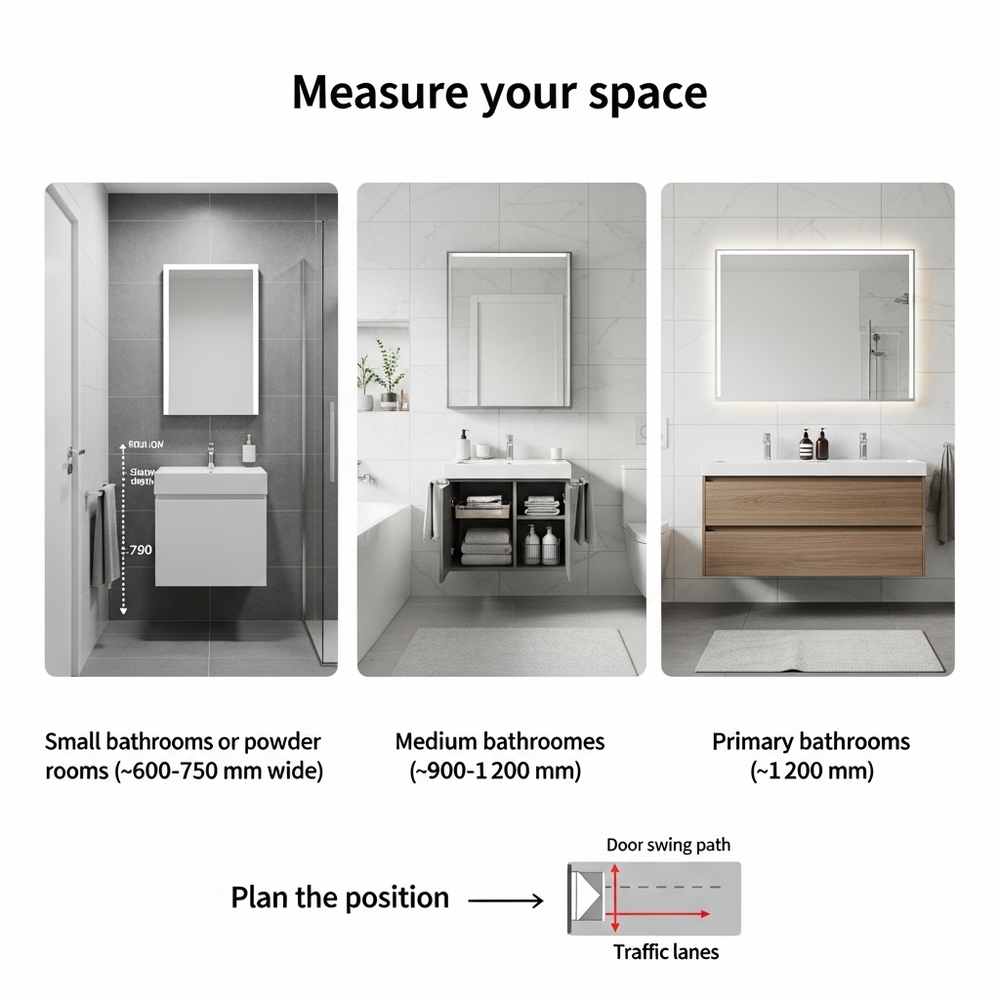
Three floor-standing vanities in various sizes are displayed alongside a diagram, helping you plan the perfect bathroom layout and optimize vanity placement and door swing.

Wide style range. Floor-standing vanities span minimalist whites, warm farmhouse timbers, and bold industrial finishes. A fluted white cabinet suits a coastal space; a dark-stained timber piece adds depth to modern industrial décor.

Size options. Multiple widths and heights let you match any floor plan and accommodate users of different statures, optimizing both ergonomics and space.

Custom details. Integrated pulls, textured surfaces, and mix-and-match tops—natural stone, engineered quartz, or ceramic—let you tailor the vanity to your exact taste and functional needs.

Select Your Perfect Vanity

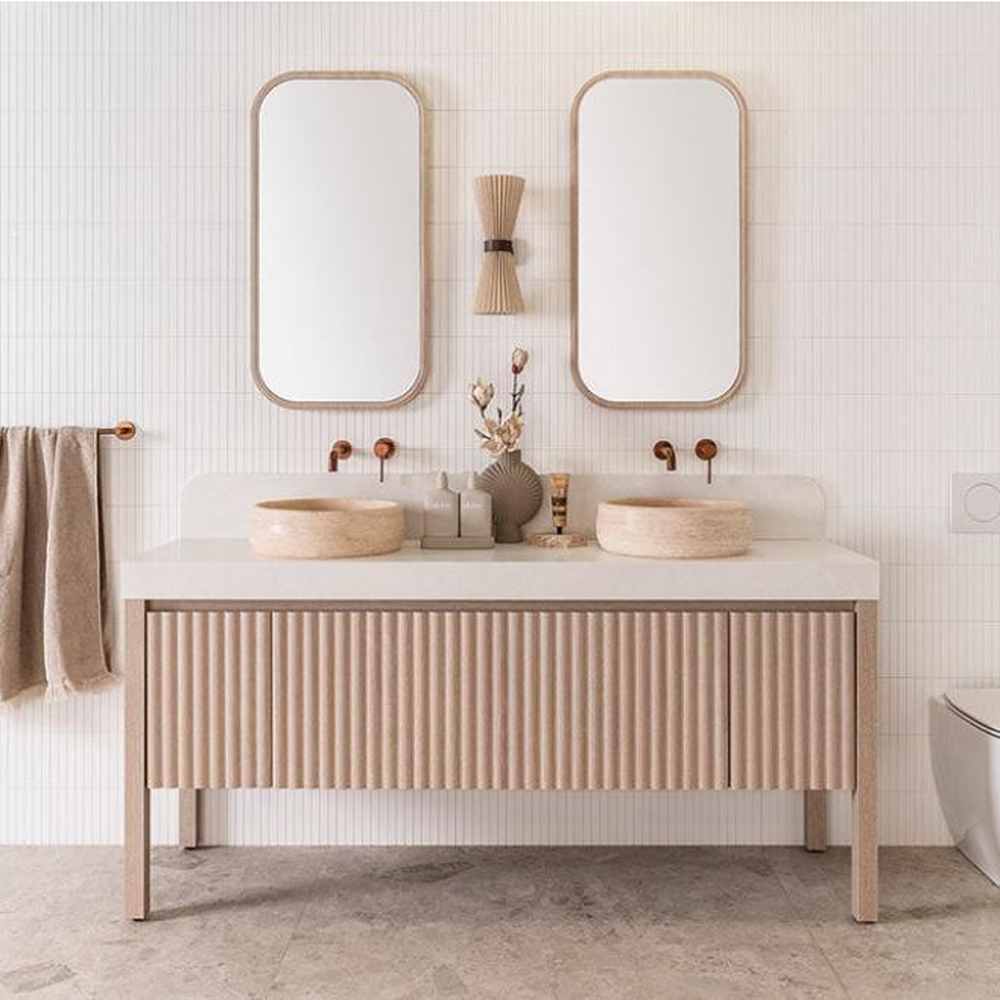
Modern bathroom with double sinks, two mirrors, and neutral-toned decor in a minimalist style features floor-standing vanities that complement the sleek bathroom layout.
Modern bathroom with double sinks, two mirrors, and neutral-toned decor in a minimalist. Image by buildmat.com.au

Ready to transform your bathroom? Use these guidelines to choose a floor-standing vanity that fits both space and routine.

Measure your space

  • Small bathrooms or powder rooms (≈600–750 mm wide): Pick a narrow, shallow-depth, single-sink unit to avoid crowding.
  • Medium bathrooms (≈900–1 200 mm): Select a model with built-in features such as pull-out bins or internal drawer dividers.
  • Primary bathrooms (≥1 200 mm): Opt for a larger or double-sink vanity with ample countertop room for everyday items.

Plan the position
Install the vanity outside door-swing paths and traffic lanes so movement remains easy and fixtures stay accessible.

Vanity material

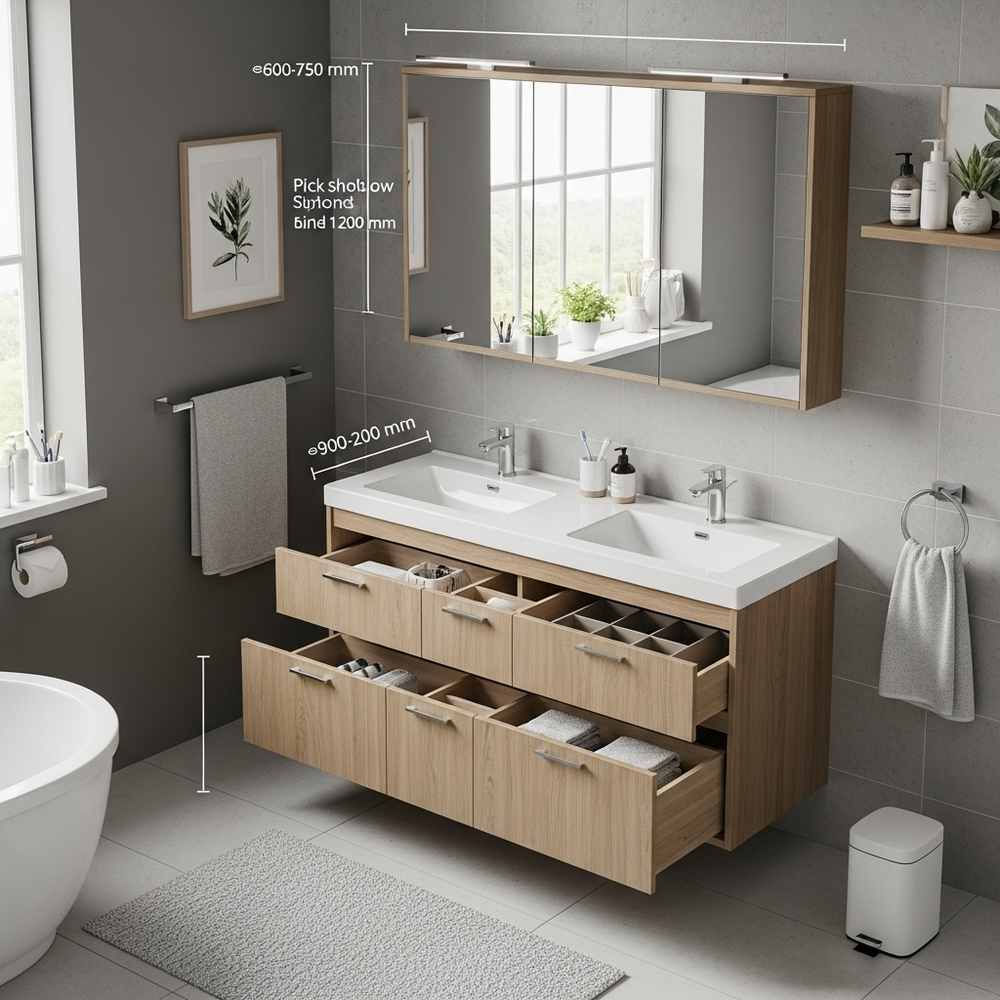
Modern bathroom layout featuring a double-sink vanity, open drawers, large mirror, and wall-mounted shelves and accessories for a functional, stylish space.

Cabinet materials

  • Solid wood: Maximum durability and classic style; needs proper sealing in humid rooms and costs more.
  • Plywood: Good strength-to-cost balance; resists moisture better than MDF.
  • MDF: Most affordable and ideal for painted finishes; must be well sealed to prevent swelling.

Countertop options

  • Natural stone (granite, marble): Luxurious and unique, but porous—keep it sealed.
  • Engineered quartz: Non-porous, highly durable, and low-maintenance; available in many patterns.
  • Ceramic / porcelain: Budget-friendly, easy to clean, and often sold with an integrated sink.

Budget factors

  1. Materials: Solid wood or natural stone raise the price.
  2. Brand reputation: Well-known labels cost more but usually include stronger warranties.
  3. Features: Soft-close drawers, built-in lighting, and specialty organizers add to the total.
  4. Customization: Non-standard sizes or unique finishes increase cost.

Simple care

  • Clean regularly: Wipe with a soft, damp cloth; skip abrasives.
  • Handle spills fast: Dry water or cleaner residue right away—especially on wood or stone.
  • Ventilate: Keep air moving to control humidity and protect all materials from moisture damage.

End note

Floor-standing vanities have won worldwide favor because they solve everyday bathroom hassles—instability, clutter, and awkward layouts—while letting you showcase your style. Their rock-solid build, ample storage, and straightforward setup form the backbone of a bathroom that works as beautifully as it looks.

Choose one and you’re investing in more than a place to wash your hands; you’re laying the foundation for a space that’s both refined and enduring.