Remodelers are more confident about the work ahead, but that does not make the next renovation quote cheaper or easier to secure. In Houzz’s latest industry survey, 40% of construction firms said they were raising rates while cost pressure and cautious clients continued to shape project decisions.
For homeowners, the useful signal is not that every contractor will add the same percentage. It is that a well prepared project is more likely to receive a firm, comparable proposal, while an uncertain scope may be priced defensively, split into phases or declined.
This creates a practical decision: improve the information in the bid before trying to negotiate the number. Drawings, finish assumptions, access conditions and change rules can now influence contractor interest as much as the headline budget.
Why is stronger remodeling demand not producing softer quotes?
The construction sector’s Expected Business Activity Indicator reached 61 for the third quarter of 2026, up from 58 in the previous quarter. The project inquiry component rose to 61 and expected new projects reached 60.
Those numbers describe direction, not dollars. Houzz calculates the seasonally adjusted indicator from the share of firms expecting inquiries and new projects to increase or decrease in the coming quarter. A reading above 50 means more firms expect improvement than deterioration. It is not a revenue forecast or a measure of quote inflation.
Confidence can therefore rise while pricing remains guarded. The same survey found that 40% of construction firms cited product or material costs as a leading pressure, 33% cited clients’ financial uncertainty and 28% cited both labor costs and fuel or transport costs.
How does contractor cost pressure reach a homeowner’s bid?
A remodeler has to price both visible work and uncertainty. Material allowances may need room for supplier changes. A complicated occupied site can add supervision time. An unresolved structural detail can carry contingency because its final labor and sequence are not yet known.
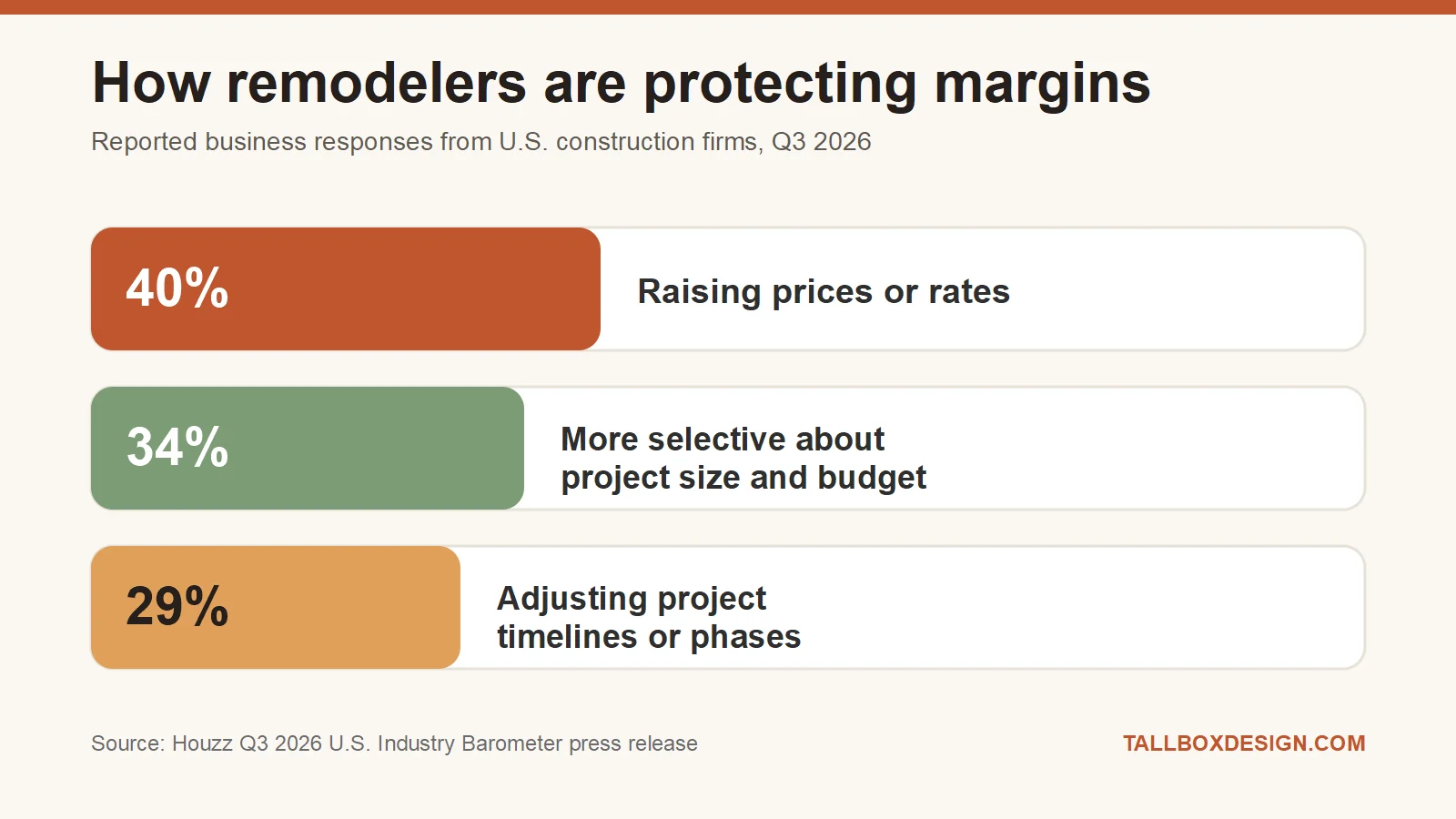
This is one reason a quote can rise without the contractor predicting a boom. The firm may be protecting margin against volatile inputs, delayed decisions and rework. Forty percent of construction firms told Houzz they were increasing prices or rates as a response to current pressure.
Homeowners should ask what moved, not simply whether the total is higher. Compare labor, named products, allowances, preliminaries, waste, permits and contingency separately. If the quotes use different specifications, the lowest total may only be the least complete interpretation of the job.

Why are remodelers becoming more selective about project size?
Thirty four percent of construction firms said they were being more selective about project size or budget. Another 20% were choosing work closer to home, and 19% were reducing project volume. Together, those responses point to margin and delivery discipline rather than a simple shortage of demand.
A homeowner cannot guarantee contractor availability, but can make a project easier to assess. State the realistic budget range, desired start window, decision makers and planning status in the first inquiry. Include photographs and drawings where they exist. This lets a firm judge fit without guessing through several calls.
That preparation matters for smaller renovations too. Tallbox’s review of shrinking remodeling budgets shows why scope discipline is increasingly important even as overall market spending grows. A modest project still needs a coherent brief if it is to compete for a good contractor’s attention.
When does phasing a renovation protect scope and budget?
Twenty nine percent of construction firms said they were adjusting project timelines or phases. Phasing can be useful when the work separates cleanly, the first stage delivers a complete usable result and later stages will not damage finished areas.
A kitchen and a detached studio may divide sensibly. Completing half a plumbing system or postponing essential waterproofing usually does not. Each return visit can repeat setup, protection, management and trade minimum charges, so phasing is not automatically cheaper.
Use phases to preserve the priority outcome, not to conceal an unaffordable full scope. A homeowner renovating an older house may also need an enabling phase for surveys, opening up and structural decisions before finishes can be priced responsibly.
How to make a remodeling quote easier to price and compare
Start with a single bid pack that every invited contractor receives. It should include the same drawings, schedule expectations, product decisions and known site constraints. If a decision is not made, state a realistic allowance rather than leaving an empty line.
For a kitchen, 3D planning and a coordinated visual specification can expose layout and finish decisions before construction. The goal is not presentation polish. It is reducing the number of interpretations a contractor must price.
Ask every bidder to identify qualifications and exclusions in the same place. Then issue answers to all bidders when a question changes the scope. This small discipline prevents one contractor from pricing new information that the others never received.
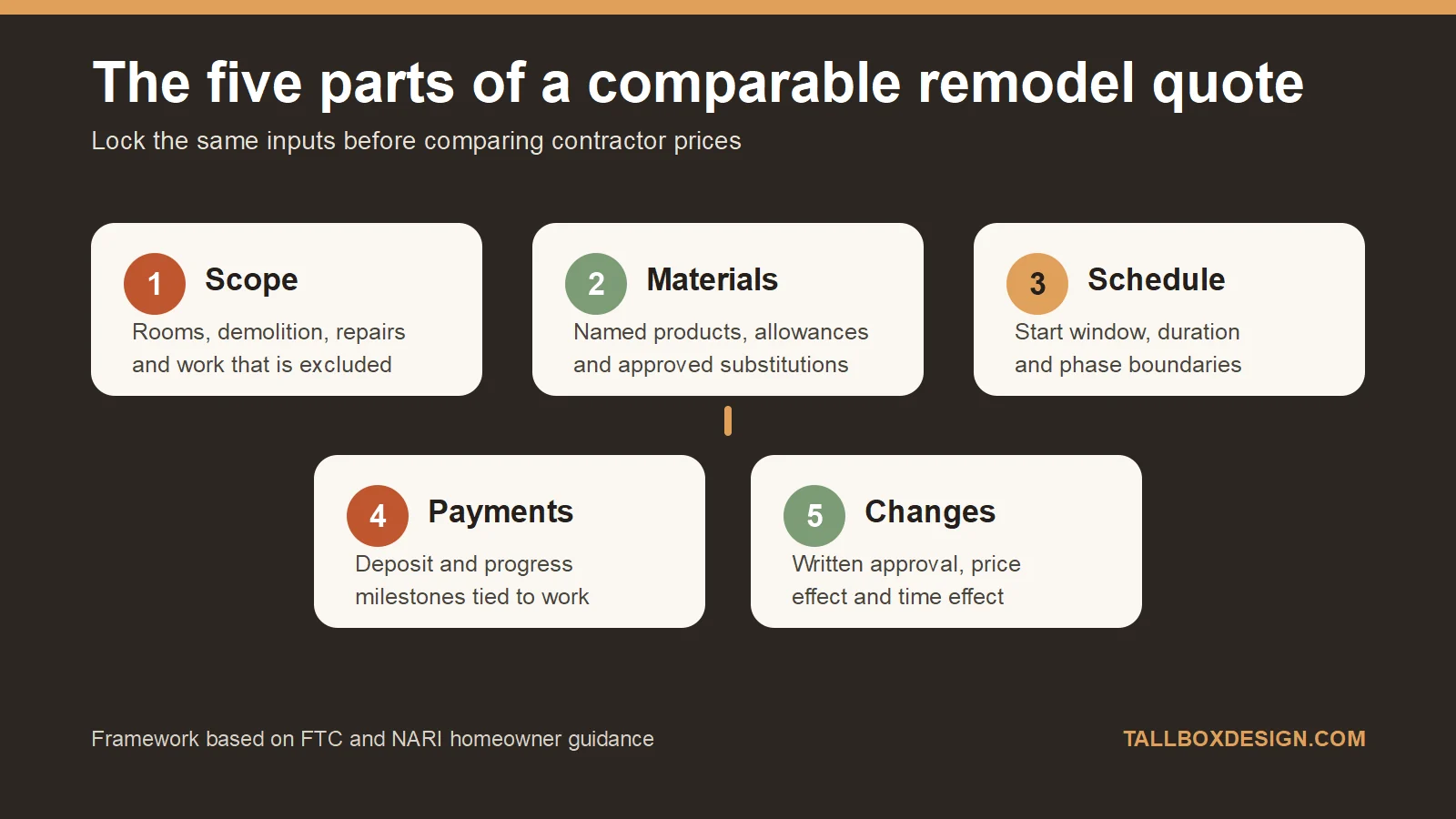
- Scope: rooms, removals, new work and explicit exclusions.
- Materials: named products or realistic allowances at the intended quality.
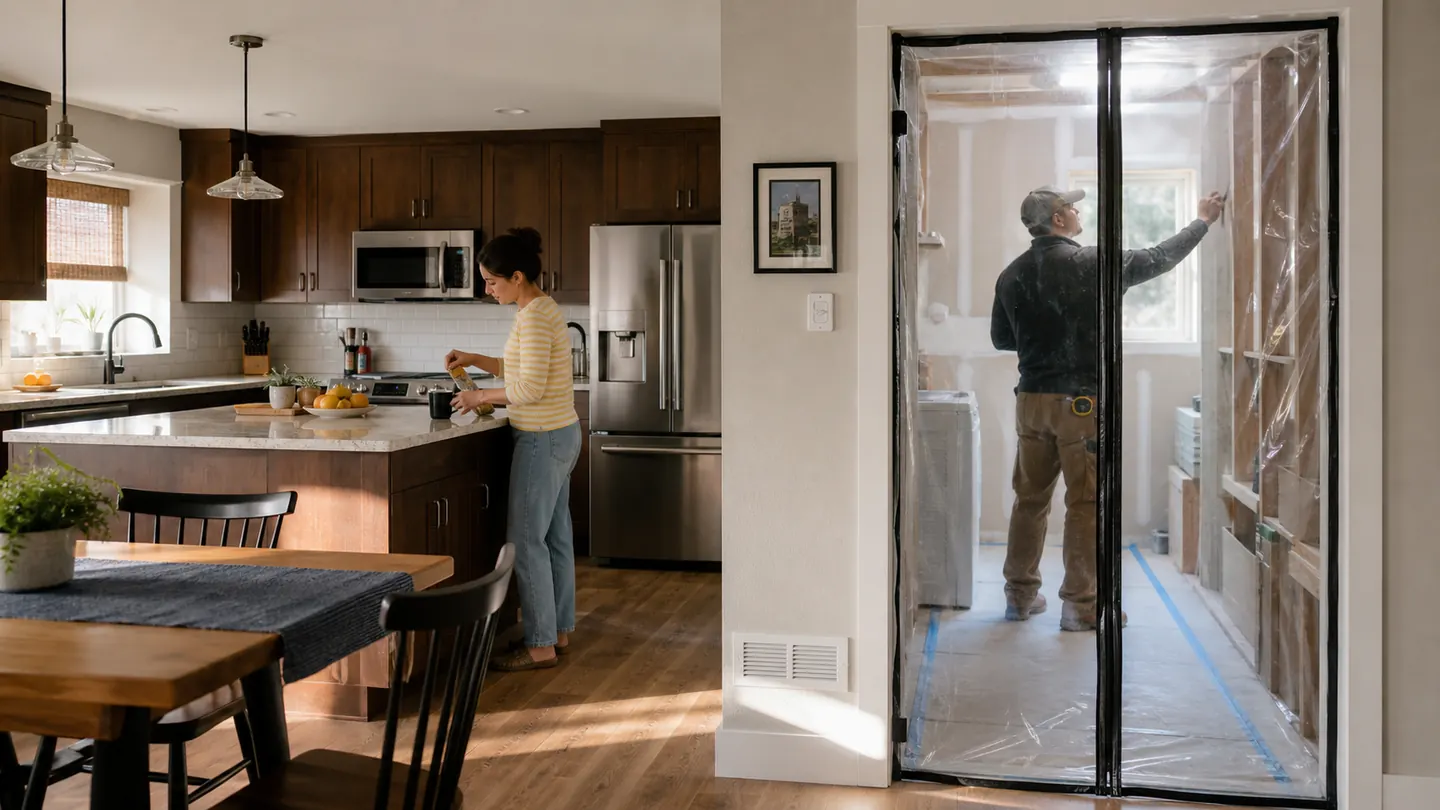
- Site: access, parking, occupancy, protection and working restrictions.
- Timing: decision deadlines, lead times, start range and essential milestones.
- Changes: who can approve them and how cost and time effects will be documented.
What should homeowners lock before signing a renovation contract?
A quote becomes useful when its assumptions survive into the contract. Confirm the exact scope, payment milestones, proof of insurance, permit responsibility, warranties, cleanup and the process for variations. Check references for work of similar scale, not merely attractive finished photographs.
Before signing, match the contract sum back to the final drawings and schedule. Record any owner supplied items, their delivery dates and who carries the risk if they arrive late. Verbal assurances should be written into the agreement.
Do not pay the full price upfront. The Federal Trade Commission advises homeowners to obtain multiple written estimates, read the contract carefully and avoid cash payments. Local law and contract requirements vary, so confirm the rules that apply where the property is located.
Set a separate owner contingency for discoveries and deliberate upgrades. Do not treat a contractor’s allowance as spare money. When one quote is materially lower, reconcile every line and exclusion before concluding that it represents the same result.
The homeowner takeaway on firmer remodeling quotes
Improving contractor confidence is a sign that more firms expect inquiries and new projects to grow. It is not a promise of cheaper bids. With costs still pressing and clients still cautious, remodelers are using rates, project selection and phasing to defend viable work.
The homeowner response is straightforward: define the result, expose the constraints and compare the assumptions. A bid ready renovation gives a good contractor a clearer reason to engage and gives the owner a better basis for deciding whether to proceed, phase or redesign.