Our analysis documents how established design directions of 2025 are expected to evolve into 2026, offering foresight for designers, manufacturers, and enthusiasts invested in the future of interiors.

Methodology note:
Our forecast at TALLBOX is based on recent innovations in materials, technology roadmaps, and observed aesthetic shifts at major trade fairs (Salone del Mobile, Stockholm Design Week) as well as analysis of influential portfolios and industry publications.

Thesis:
The primary trend from 2025 into 2026 is a transition—from interiors defined by static authenticity to spaces characterized by dynamic, adaptive, and deeply personalized environments.

Picture of George Nicola
George Nicola

George is a seasoned interior designer and property marketing strategist with over 13 years of experience. He specializes in transforming properties into visually stunning spaces, helping clients recognize the potential and beauty in each property. With an impressive international client base of exciting projects throughout Europe and America.

From Quiet Tech to Sentient Environments

2025’s hallmark was “Quiet Tech”—solutions like hidden speakers, invisible wiring, and under-surface charging ensured technology was essential yet visually discreet, never disrupting serene living environments.

Proactive Wellness Systems

  • From Reactive to Proactive: Home technology advances beyond user-activated devices. Environments anticipate needs: temperature, lighting, and even acoustic levels are automatically tuned through AI analysis of patterns and preferences.
  • Automated Circadian Lighting: Light systems emulate the solar cycle, optimizing color temperature and intensity to reinforce natural biorhythms—demonstrably improving sleep patterns and well-being.
  • Biometric Data Integration: Environmental sensors, coupled with personal wellness metrics, enable climate and comfort settings to adjust for individual health, moving wellness from trend to core home function.
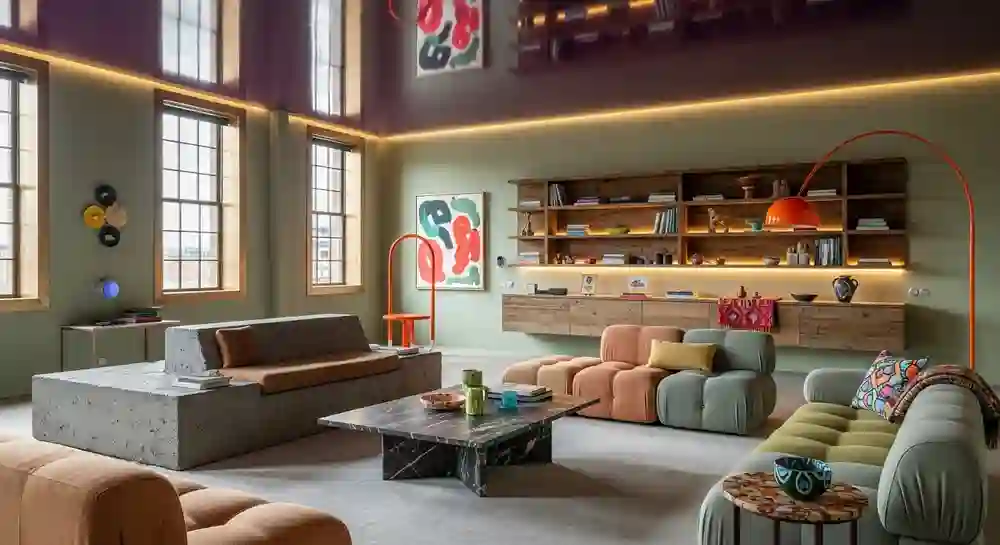
Modern living room with colorful furniture, large windows, wall art, bookshelves, and warm ambient lighting—embracing adaptive spaces and the latest interior design trends.

Furnishings: From High-Performance to Hyper-Adaptable

2025 Baseline: High-Performance Multifunction

Driven by hybrid workstyles and shrinking urban footprints, 2025’s interiors featured modular furniture designed to multitask—guest beds folded into desks, and seating doubled as storage.

2026 Evolution: Nomadic and Hyper-Adaptable Systems

  • User Reconfiguration: Furnishings are designed for tool-free modification—chairs, tables, and shelving can be quickly reconfigured for different uses throughout the week.
  • “Nomadic Furniture”: Pieces feature handles, wheels, or lightweight engineering for easy relocation and adaptability, responding to the movement patterns of a more transient, gig-oriented workforce.
  • Material Innovation in Modularity: Expect more use of technical fabrics, lightweight aluminum, and recycled composites, delivering durability without aesthetic compromise. Modular systems grow more elegant as engineering allows complex, yet intuitive, user customization.

Materiality: From Raw Authenticity to Sculptural Brutalism

The 2025 baseline is rooted in a deep focus on raw, unprocessed materiality, driven by the principles of Biophilic Design. Unsealed stone, raw wood, clay, bamboo, and natural woven fibers were specified to replace synthetic finishes, fostering a direct connection with nature. Interior designers in 2025 focused on creating tactile, authentic environments that express a sense of balance, harmony, and an earthy, down-to-earth ambiance, and they continue to do so.

Colorful, modern lounge with curved walls, plants, abstract art, and vibrant seating in a bright, airy space—reflecting the latest interior design trends for adaptive spaces.

2026 Evolution to Neo-Brutalism and Circular Design

  • Increased Use of Monolithic Forms: Stone, concrete, and composite materials will be shaped into bold, sculptural masses—transforming structural elements (fireplaces, kitchen islands, bathtubs) into visually commanding, textural focal points.
  • The Rise of Neo-Brutalism: Expect environments shaped by raw concrete, limed oak, patinated metals, and pronounced stonework. These spaces are intentionally weighty and unadorned, projecting both physical and conceptual strength.
  • Introduction of Circular Design: Sustainability deepens. Instead of merely “natural,” materials must be reclaimed, recycled, or fully recyclable. The material’s origin and full lifecycle become storytelling elements; visible wear and intentional patina are celebrated as part of the piece’s biography.

Aesthetics: From Layered Authenticity to “Dopamine Decor”

2025 Baseline: Curated Mid-Century Blends

2025 interiors harmonized authentic vintage Mid-Century Modern pieces with new artisanal objects. The result was layered warmth—spaces that felt personal and intentionally collected, balancing nostalgia with the contemporary.

Modern living room showcasing interior design trends with colorful pillows, abstract art, a green sofa, and a multicolored accent chair—perfect for adaptive spaces that blend style and comfort.

2026 Evolution: Highly Personal and Expressive Curation

  • Beyond a Single Style: The MCM reign wanes; instead, designers curate spaces as autobiographical collages—furniture, art, textiles, and objects originating from multiple eras and regions reflect each inhabitant’s distinct history.
  • “Dopamine Decor”: Exuberant, joyful environments come to the fore. Vibrant color, playful silhouettes, and sentimental keepsakes are deployed specifically to evoke delight, combating everyday monotony.
  • Spaces as Personal Memoirs: Interiors become displays of travel, heritage, and artistry. Expect more visible collections, heirlooms, and narrative arrangements where every element carries a story or cherished memory.

Color and Texture: From Architectural Zoning to Immersive Finishes

2025 Baseline: Color as Architecture

Designers in 2025 embraced “Color Drenching” (floor-to-ceiling use of a single—or closely related—hue) and painted geometric shapes to carve virtual zones into open layouts, giving structure to fluid living spaces.

2026 Evolution: Emphasis on Tactile and Complex Color

  • Textural Wall Finishes: There’s a pronounced rise in limewash, tadelakt, Venetian plaster, and other artisanal wall treatments. These finishes offer not just color but inherent texture, depth, and gentle, shifting reflectivity.
  • Complex Color Palettes: The pendulum swings from primaries to subtlety—moody greens, deep rusts, and nuanced, desaturated pastels dominate, yielding environments that are calming yet rich in visual complexity.
  • The High-Gloss Ceiling Returns: Glamorous, lacquered ceilings (often in jewel tones) reflect both light and personality, injecting drama and opening up vertical space in new, unexpected ways.

Recap of 2025 to 2026 design trends

The central movement in interior design from 2025 to 2026 is from authenticity and fixed “rules” to adaptation, personality, and sensory engagement. Spaces are increasingly conceived not only for how they look, but for how they feel and respond—to mood, health, memory, and shifting needs.

Final thought:
As boundaries between work, leisure, health, and communion blur, so too must the boundaries in design. The most innovative interiors of 2026 will be those that adapt gracefully to the quirks, histories, and aspirations of their inhabitants, proving that design’s true modernity lies in its capacity to respond, reflect, and evolve.