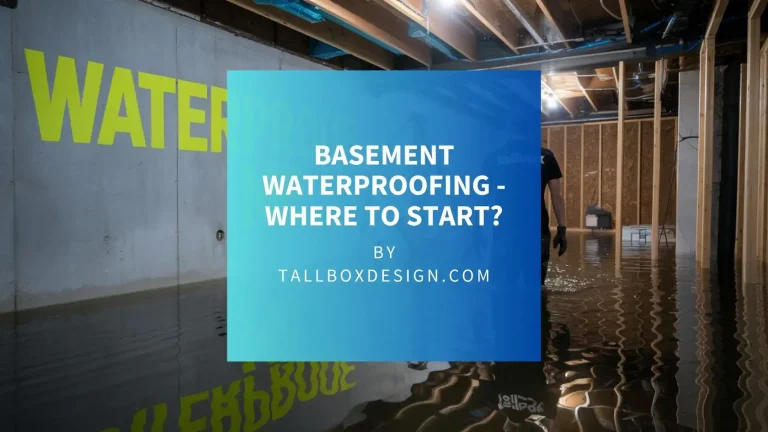
Water damage lowers home values by creating visible defects, increasing repair costs, and raising concerns about mold or future problems, often forcing sellers to accept offers up to 25% below market value. Properties with unresolved or poorly documented water damage can linger on the market and face fewer interested buyers, especially in hurricane-prone areas.
Water damage is a leading cause of lost home value in the United States, especially in regions vulnerable to hurricanes and severe storms. From minor leaks to catastrophic storm surge, any water-related incident can shrink property equity, reshape insurance costs, and lengthen the path to a full sale. Understanding the range of causes and how they intersect with real estate outcomes is crucial for both sellers and buyers.

George is a seasoned interior designer and property marketing strategist with over 13 years of experience. He specializes in transforming properties into visually stunning spaces, helping clients recognize the potential and beauty in each property. With an impressive international client base of exciting projects throughout Europe and America.
What Causes Water Damage in Homes?

Water can enter a home in several ways, each with different implications for property value.
- Everyday leaks: Supply-line breaks, hidden pinhole leaks, and water heater bursts often go unnoticed until they cause stained drywall or swollen floors.
- Groundwater and overland flooding: Flood zones cover millions of U.S. homes. Even a heavy rain or swollen river can overwhelm foundations and basements.
- Wind-driven rain: During hurricanes, winds can lift roof edges, break soffit vents, or shatter windows, allowing rain to travel deep inside. Water may soak insulation and ruin flooring far from the actual breach.
- Compounded hurricane events: When extreme wind and storm surge strike together, the combination dramatically increases both repair costs and value loss.
How Does the Severity Affect Home Value?
Not all water damage is equal in the eyes of buyers and appraisers. The hit a property takes depends on the extent of the destruction and how quickly it is repaired.
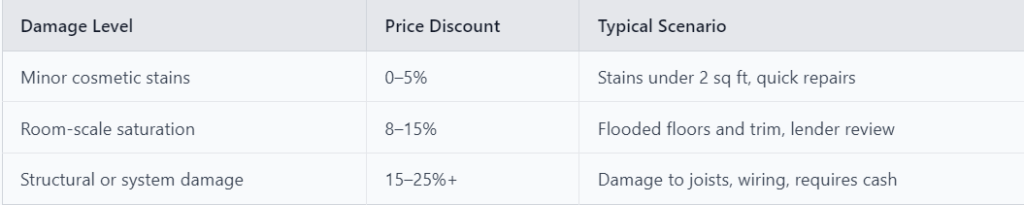

Wind damage multiplier: If storms tear off part of a roof, additional water damage can double repair costs. Every hour of exposure can turn a simple fix into a major project.
Mold and Health: Why Buyers Walk Away
Mold grows fast in wet homes, especially when humidity stays above 60%. Colonies can appear within two days, and visible mold almost always lowers offers or kills a deal. Mold remediation is expensive, and homes with active growth are not eligible for most loans. Sellers may have to accept cash offers far below listing price.
How Wind and Hurricanes Make Everything Worse
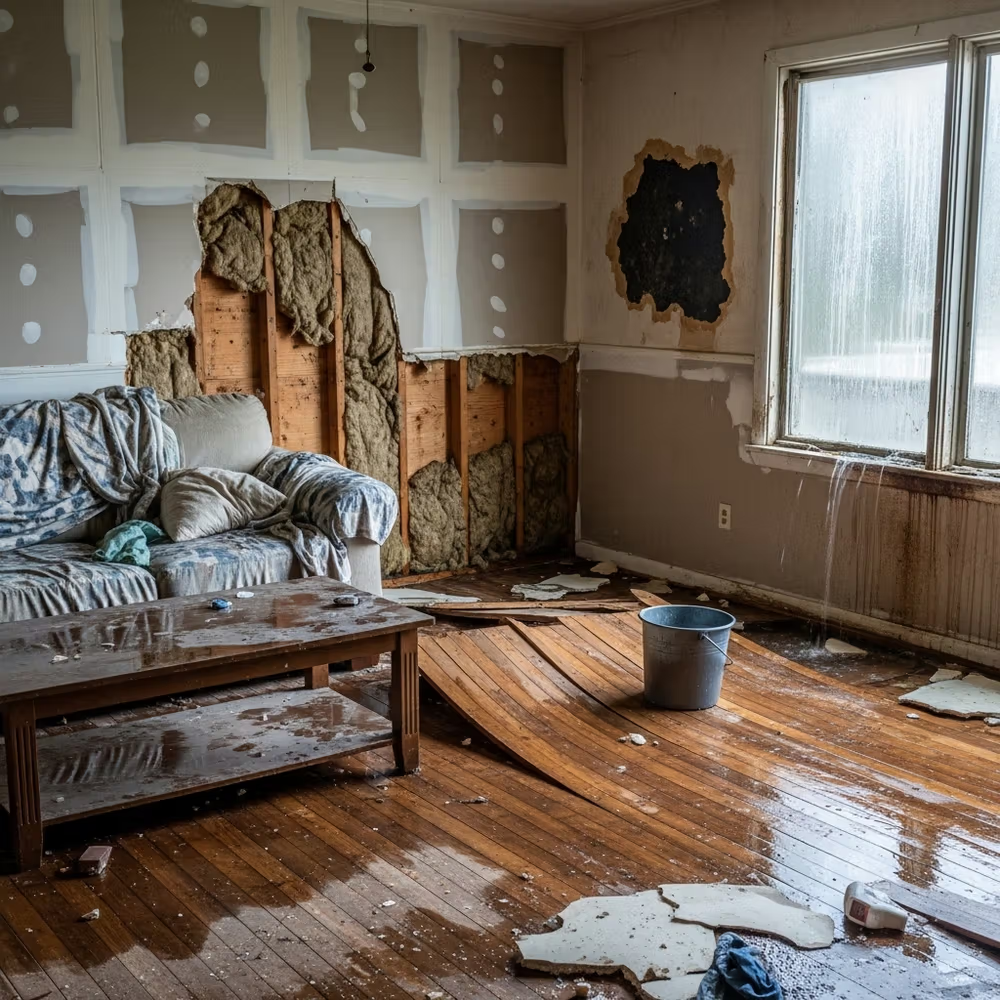
Hurricanes not only bring more water but also create new paths for it to enter the house.
- As wind lifts roof decking even half an inch, rain and debris enter attics and walls.
- Broken garage doors or windows at high wind speeds open large gaps for rain to accelerate in.
- Insurance rules often leave gaps: many policies won’t cover water unless the storm caused an obvious opening.
What Happens to the Market After Floods and Storms?
The impact of water damage doesn’t stop with a single sale.
- Immediately after major floods or hurricanes, affected homes typically sell for 10–25% less than their pre-disaster value.
- Over the next one to three years, prices often recover as repairs get completed and renovated homes attract buyers seeking resilient properties.
- Where floods are frequent or repairs drag out, neighborhood stigma can lead to ongoing discounts and slower turnover.
Flood Risk Perception and Insurance
Flood risk shapes both insurance costs and buyer interest.
- Insurance premiums can rise sharply after a claim or map update.
- High named-storm deductibles mean out-of-pocket costs can reach tens of thousands before coverage kicks in.
- In some coastal markets, buyers now ask for seller credits to cover future insurance premiums, especially after new flood maps are published.
Repair Costs and Their Effect on Sale Price
Water and wind repairs cover a wide range of expenses.
- Dry-out and demolition average $4–$7 per square foot.
- Structural repairs run from $10 to $15 per square foot.
- Full gut renovations with mold cleanup cost much more, but often are necessary for a sale to close.
Homes with complete repair documentation, test results, and receipts typically recover up to 10% more value on the open market.
How Hurricanes Change Buyer and Insurance Behavior
Market data show buyers in hurricane-prone states increasingly demand proof of recent roof upgrades or an insurance quote below a set threshold. Insurance companies often freeze new policy issuance for several days after a hurricane, so buyers and sellers must plan closings accordingly
Long-Term Value in Coastal Regions
Even with the threat of rising seas and climate uncertainty, many high-risk coastal markets show resilience. Quick repairs, aggressive permitting, and investor capital can return average prices to pre-storm levels within a few years. Well-mitigated homes in these areas may eventually outperform less-prepared peers.
Advice for Sellers and Buyers
Sellers:
- Hire independent moisture and infrared inspectors before listing.
- Gather all repair invoices, clear test results, and wind-mitigation certificates.
- Disclose water history early to avoid legal risk and build trust.
Buyers:
- Pay for upgraded inspection options, including moisture mapping and prior claims review.
- Plan for hurricane deductibles and premium jumps in your purchasing budget.
- Seek documentation and ask probing questions about prior repairs and mitigation.
Market Trends After Recent Hurricanes
Major storms typically push prices down 12–20% in the first month for affected homes.
Areas with fast, well-funded repairs can bounce back to or above prior market averages within a year.
Neighborhoods that face repeated events or insurance limitations may lag behind.
How Fast Do Hurricane Areas Recover?
The first three months are about emergency dry-out, roof tarping, and removing debris.
Reconstruction and insurance claims take most of the next year.
In years two and three, renovated homes return to the market and prices re-stabilize, especially if improved defenses are in place.
Conclusion
Treat water damage as an urgent financial threat, not just a repair issue. Waterproofing, roof upgrades, full disclosure, and rapid repairs can protect or even grow home equity in high-risk regions. In markets shaped by hurricanes and floods, resilience and transparency are often the difference between deep discounts and strong returns.
FAQ
How much can unrepaired water damage reduce my home value?
Expect a 5–25% reduction, depending on severity and whether repairs are documented and accepted by insurers and lenders.
Is flood insurance mandatory everywhere?
No. Only homes in FEMA high-risk zones with federally backed mortgages must have it—but buyers often factor premiums and risk into their offers.
Can a home fully recover value after a hurricane?
Often, yes. If repairs are complete, documented, and buyer demand remains strong, values can recover in one to three years.
Do wind and roof upgrades lower insurance costs?
They do. Roof reinforcement and impact-rated windows can reduce premiums significantly—sometimes by up to 30%.