Is Clear Lake, IA, one of the best places to live?
Clear Lake, Iowa, offers a desirable small-town lifestyle for individuals and families, providing access to natural beauty and community-oriented activities like boating, fishing, and local festivals. The town centers around its namesake lake, offering year-round recreational opportunities. Clear Lake hosts vibrant events, including the Color the Wind Kite Festival and Christmas by the Lake, fostering a strong sense of community.
People seeking holiday homes are attracted to Clear Lake’s recreational opportunities, such as boating and fishing, and its lively community events, like the winter kite festival. Clear Lake’s Color the Wind Kite Festival is notable as the Midwest’s largest and most colorful winter kite event. Exclusive dock access is available with some Clear Lake homes through associations, signifying a premium aspect of lakeside living. During summer, the area becomes a vibrant hub of activity. The lake itself was formed by glaciers over 14,000 years ago. Its natural, glacial origin provides geological significance and enhances its charm, unlike man-made lakes. Families enjoy unique local celebrations, for instance, Christmas by the Lake, which includes fireworks over the frozen water.
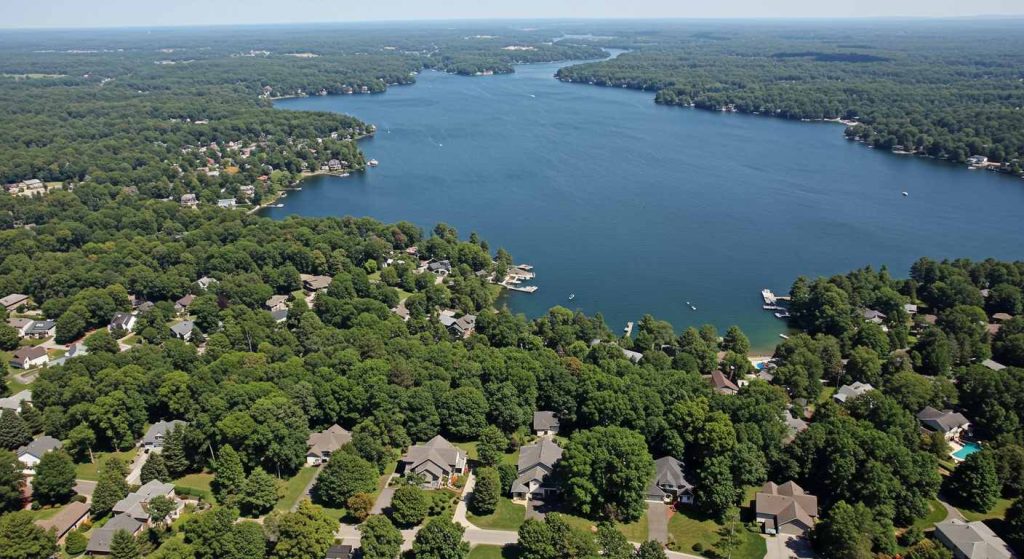
Located in north-central Iowa, the town features the spring-fed Clear Lake, spanning 3,684 acres and offering picturesque beaches alongside fishing and boating. The town is renowned for the Surf Ballroom and Museum. This historic venue holds significance in rock ‘n’ roll history as the location of Buddy Holly’s final performance before his tragic plane crash in 1959.
Clear Lake, Iowa, uses the ZIP code 50428. The town is widely recognized for its vibrant community events and recreational opportunities, hosting unique annual festivals such as the Color the Wind Kite Festival, 4th of July celebrations, Harvest Festival, and Christmas by the Lake. These gatherings strengthen community bonds and attract visitors from across the region.

George is a seasoned interior designer and property marketing strategist with over 13 years of experience. He specializes in transforming properties into visually stunning spaces, helping clients recognize the potential and beauty in each property. With an impressive international client base of exciting projects throughout Europe and America.
Table of Contents
Clear Lake, located in north-central Iowa, provides easy access to major cities, including Des Moines (110 miles), Minneapolis (140 miles), Omaha (200 miles), and Chicago (350 miles). The town is strategically positioned along Interstate 35, serving as a convenient hub for regional travel. This location allows residents to enjoy Clear Lake’s lakeside tranquility while having practical access to the amenities of larger urban centers. Clear Lake offers a notable mix of housing options, ranging from affordable homes to premium lakeside properties featuring exclusive dock access.
Nearby Major Cities (Approximate Distance & Drive Time):
- Des Moines, IA: 110 miles (1 hour 45 minutes)
- Minneapolis, MN: 140 miles (2 hours 15 minutes)
- Omaha, NE: 200 miles (3 hours 30 minutes)
- Chicago, IL: 350 miles (5 hours 30 minutes)
How Safe is CLEAR LAKE, IA?
Clear Lake, IA (ZIP code 50428) is considered a safe place to live, with crime rates below the national average. The town experiences minimal violent crime and has a strong community-oriented law enforcement presence. This safety factor, combined with its natural beauty and vibrant community events, makes Clear Lake one of the best places to live in Iowa.

Clear Lake receives an overall crime grade of C+. This places the city in the 51st percentile for safety compared to other US cities, meaning it is safer than 51% of them. The overall crime rate averages 23.70 incidents per 1,000 residents in a typical year.
Crime rates vary significantly across Clear Lake, as shown on safety maps. Western and southwestern parts of the city are rated considerably safer (Grade A+, dark green). In contrast, eastern areas experience much higher crime rates (Grade F, red), particularly zones near the airport and major roads. Central areas generally hold a C rating (yellow/orange). Residents reportedly perceive the southwest part of the city as the safest area.
Examining crime categories, Property crime (Grade B-) and Other crime (Grade C-) rates are higher than Violent crime rates (Grade B). Specific offenses with the highest reported frequency include theft (7.890 per 1,000 residents), drug crimes (5.140 per 1,000), and vandalism (4.986 per 1,000). Violent crimes occur less frequently; assault is the most common type reported within this category (1.347 per 1,000).
The tangible cost of crime per resident ($269) is lower than the Iowa average ($326) and the US average ($464).
When compared to surrounding cities, Clear Lake’s (Overall C+) safety profile sits in the middle range. Clear Lake, IA is Safer Than Mason City (D-), Emery (D), Fertile (C-), Freeman (D-), Hanlontown (C), and Portland (C). Notably, it is significantly safer than Mason City, which has poorer grades across overall, violent, and property crime categories.
Clear Lake is less safe overall compared to Ventura (B), Miller (B), and Garner (B). These cities generally boast better grades, particularly Ventura, Miller, and Garner, which all have A- grades for violent crime compared to Clear Lake’s B.
If we have to compare its safety level is roughly comparable to Swaledale (B-).
Clear Lake’s overall crime rate is average for the US and its per-resident cost of crime is relatively low, its safety compared to immediate neighbors varies. It is safer than some, notably the larger nearby city of Mason City, but less safe than several smaller surrounding towns like Ventura and Garner. Safety within Clear Lake itself is highly dependent on location, with western areas being considerably safer than eastern areas.
Affordability and the Surfside Beach Housing Market in Clear Lake, IA
Clear Lake offers a notably affordable cost of living compared to national averages. The overall cost of living index ranges from 89 to 96 (with the national average at 100), positioning Clear Lake as approximately 4-11% less expensive than the typical American city. This affordability extends across multiple categories, with particularly favorable indices for housing (71-88), groceries (88-96), and transportation (91-96).
Homeowners earn a median income of $81,076, allowing for sustainable housing budgets with mortgage payments averaging $2,232, slightly below the national average of $2,347.
Other living expenses remain reasonable as well. Grocery costs run 4-12% below national averages, with staples like milk ($4.56 vs. $4.67 nationally) and ground beef ($5.27 vs. $5.84) providing everyday savings. Transportation costs benefit from affordable fuel prices ($3.39/gallon) and maintenance services. While utilities exceed national averages with an index of 111, this reflects the region’s climate requirements for heating during harsh winters and cooling during humid summers.
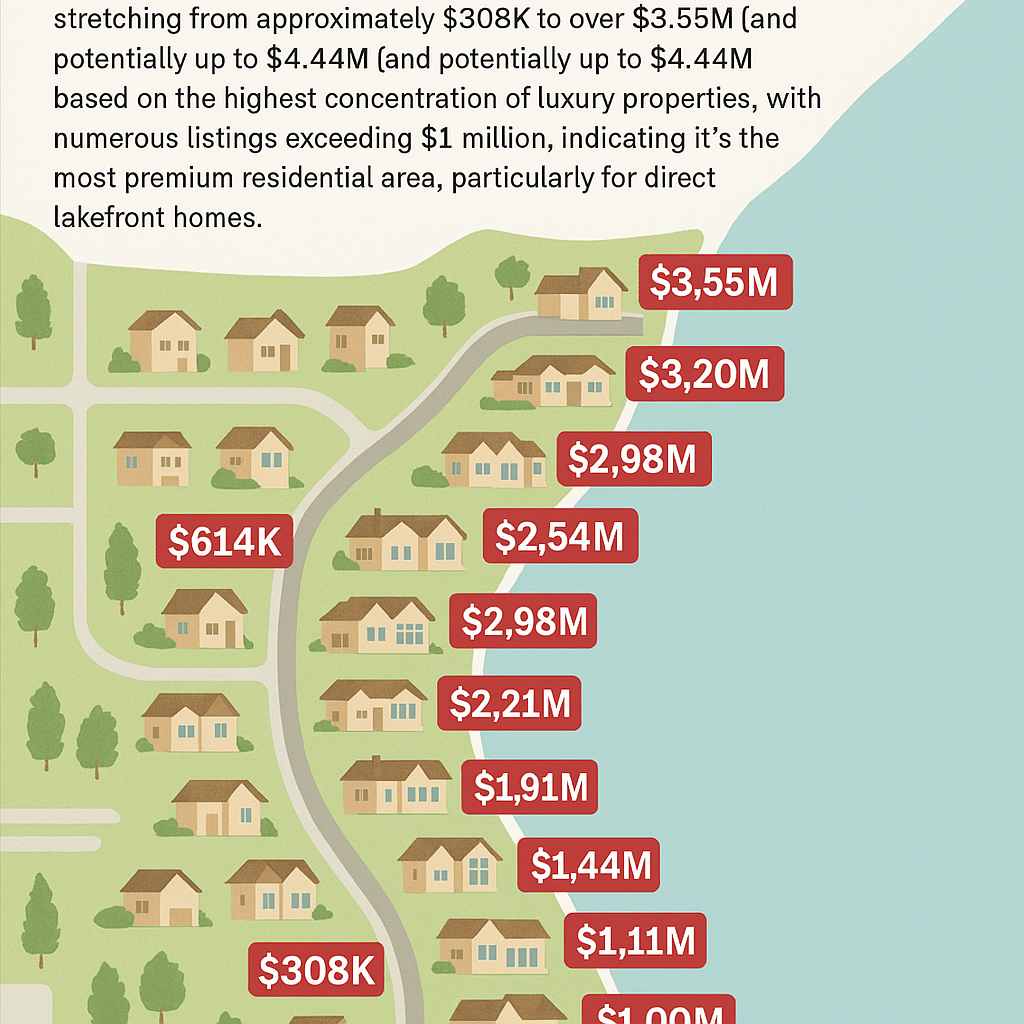
Housing costs in Clear Lake present an interesting dynamic. We calculated that the median home value is at $425,000, and the prevalence of homes listed above $300K (especially near the lake) suggests affordability could be a challenge for many buyers. The south and north shores of the lake have higher average price per house compared to the East and West areas and some surrounding communities; this indicates that the overall housing affordability remains strong at least at 50% of the areas in the city.
Rental prices are especially competitive, with median rents of $636-$755, significantly below the national average.
All this creates accessible entry points for both homeowners and renters, with 23% of rentals costing less than $500 monthly and only 5% exceeding $2,000.
At TALLBOX we analyze 170 listings at the time of writing this post and here’s what we found.
- South Shore: This area exhibits the widest and highest price range, stretching from approximately $308K to over $3.55M (and potentially up to $4.44M based on data). It features the highest concentration of luxury properties, with numerous listings exceeding $1 million, indicating it’s the most premium residential area, particularly for direct lakefront homes.
- West Shore: Prices along the west shore (north of Ventura Heights) generally range from around $279K (for multi-unit listings) up to $900K. While still featuring high-value properties, this section shows fewer multi-million dollar listings compared to the South Shore in this specific view.
- North Shore: The North Shore shows a broad range, from approximately $225K for properties further inland to about $1.23M closer to the water/town. Many listings along the immediate shore fall within the $340K to $600K range.
- East Side (Town Area & Towards Mason City): This area generally presents the most moderate price range, typically from $215K up to $625K. Prices are concentrated in the $200Ks and $300Ks within the main town grid. Properties further east towards I-35 show prices ranging from roughly $290K to $500K.
There is a distinct price gradient radiating outwards from the lake. Direct lakefront properties, especially on the South Shore, command the highest prices by a significant margin. Prices decrease noticeably in the main town area on the East Side and further inland away from the water towards Mason City and the local Airport.
Exploring the Clear Lake market reveals this clear pattern: proximity and access to the lake itself are the key factors determining property cost and overall desirability in this sought-after community. Understanding this structure is vital for buyers.
Quality of Life in Clear Lake, IA
Clear Lake has a population of approximately 7,567 as of 2023, showing a gradual decline from its peak of 8,184 in 2000. The city’s historical population trajectory reveals steady growth throughout most of the 20th century, with notable expansion in the post-World War II era—increasing from 4,977 residents in 1950 to 6,158 by 1960, a 23.7% growth rate.
The lake itself plays a significant role in the city’s history and economy. Native American tribes, including the Winnebago (Ho-Chunk) and Dakota Sioux, utilized the area seasonally before European settlement. The first permanent Euro-American settlers, Joseph Hewitt and James Dickirson, arrived in 1851, establishing relationships with these indigenous communities.
Perhaps the most internationally recognized aspect of Clear Lake’s history is its connection to music history through the Surf Ballroom and the tragic plane crash on February 3, 1959—known as “The Day the Music Died”—which claimed the lives of Buddy Holly, Ritchie Valens, and J.P. “The Big Bopper” Richardson. This event, immortalized in Don McLean’s song “American Pie,” draws thousands of visitors annually and has cemented Clear Lake’s place in American cultural history.
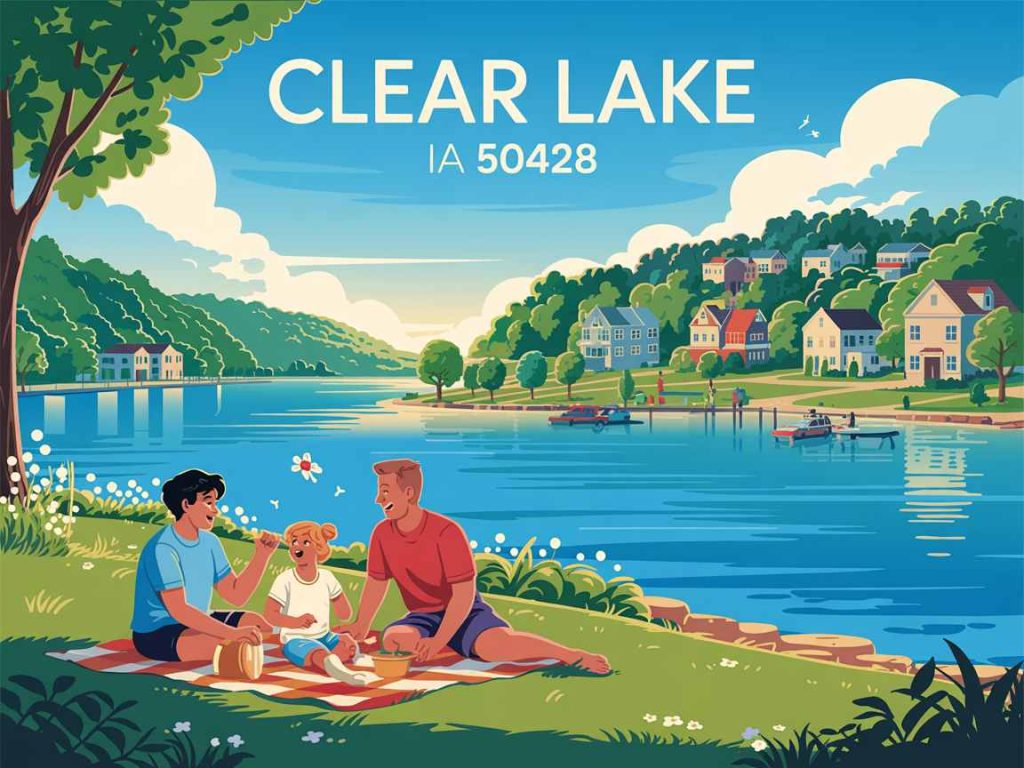
Clear Lake’s natural and recreational amenities center around its crown jewel—the 3,643-acre glacial lake that gives the city its name. This expansive body of water forms the foundation for a rich array of outdoor activities and lifestyle opportunities throughout the year.
The 55-acre Clear Lake State Park, situated along the lake’s southeastern shore, offers comprehensive recreational facilities including a 900-foot sandy beach, extensive boating access, premier fishing opportunities for walleye, muskie, and northern pike, and over 10 acres of picnic areas. The park’s 149 campsites with modern restrooms, showers, and electric hookups make it one of Iowa’s most popular campgrounds. Its historic lodge, constructed in 1938 by the Works Progress Administration, hosts weddings, reunions, and community events.
Water-based recreation options abound, supported by extensive infrastructure. A $9 million dredging project has enhanced the lake’s fish populations, while marinas offer rentals for kayaking, jet skiing, and sailing. The Clear Lake Yacht Club hosts regular regattas, and the Clear Lake Aquatic Center provides indoor and outdoor swimming options, including a flume slide and heated pool.
For land-based activities, a 14-mile trail circumnavigates the lake, complemented by routes through oak groves in Clear Lake State Park. Cycling enthusiasts enjoy dedicated paths, while nearby public lands permit hunting for deer, pheasants, and waterfowl, attracting over 250,000 annual visitors.
Cultural amenities include the Central Gardens of North Iowa, a botanical garden offering educational tours and events, and the historic Surf Ballroom, which commemorates the 1959 “Day the Music Died” while continuing to host live music performances. The city has also invested in modern amenities, including waterfront co-working spaces designed to attract digital nomads, reflecting Clear Lake’s adaptation to changing work patterns.
Specialized facilities cater to different demographic groups, with senior living options like Apple Valley Assisted Living (starting at $4,700/month, below the local average of $5,200) and Glen Oaks Community, a 55+ community featuring townhomes and apartments with amenities like an indoor pool, fitness center, and walking trails.
What are the Education Opportunities?
Clear Lake offers a variety of education opportunities that make it an attractive place to live, particularly for families. The Clear Lake Community School District provides public education from preschool through 12th grade, with schools like Clear Creek Elementary, Clear Lake Middle School, and Clear Lake High School focusing on equipping students with the tools to build productive futures.
Newman Catholic Schools in nearby Mason City offer private education with a focus on spiritual and intellectual development. For higher education, North Iowa Area Community College (NIACC), located close to Clear Lake, is a nationally-ranked institution providing affordable two-year programs for students of all ages.
Why This Makes Clear Lake One of the Best Places to Live?
The Clear Lake Community School District emphasizes academic growth and future readiness for all students. NIACC provides affordable and high-quality programs for career development or transfer to four-year universities.
Families benefit from a nurturing environment that values educational excellence. Local schools boast impressive graduation rates, reflecting the quality of education in the area. Residents have easy access to one of Iowa’s top community colleges for affordable higher education.
What to consider before moving to Clear Lake, IA?
Job Opportunities
Clear Lake’s job market presents notable limitations when compared to larger metropolitan areas. The city’s economy, while diversified, lacks the breadth and depth of opportunities found in urban centers. Employment is concentrated in several key sectors, with tourism generating approximately 34% of local GDP through lake-related activities and events like the Surf Ballroom’s Winter Dance Party.
This tourism-centric economic model supports a relatively low 2.9% unemployment rate but creates significant seasonal fluctuations and underemployment challenges during off-peak months. The city experiences a substantial population increase during summer—from 8,000 permanent residents to approximately 12,000—indicating the seasonal nature of many employment opportunities.
Manufacturing remains present but limited, with companies like FRC Component Products specializing in avionics components, decorated plastics, and machining services. Technology employment exists through firms like Kingland Systems, a global leader in data management solutions for financial compliance and risk assessment. However, these specialized employers offer relatively few positions compared to more diversified urban economies.
Recent developments have somewhat improved the employment landscape. McKesson Corporation constructed a 340,000-square-foot pharmaceutical distribution center in the Larry Luker Memorial Industrial Park, adding 164 jobs with an annual payroll of $6.5 million. Additionally, Clear Lake has invested $2.1 million in waterfront co-working spaces to attract digital nomads and remote workers, reflecting an attempt to diversify beyond traditional employment models.
Healthcare and social services offer some stability, with organizations like Good Samaritan Society providing consistent employment. However, comprehensive healthcare facilities are more concentrated in nearby Mason City, limiting advanced medical career opportunities within Clear Lake itself.
The average annual wage in Clear Lake ($66,900) exceeds that of neighboring communities, but specialized professional roles in fields like law, engineering, and advanced technology often require commuting to larger centers. For ambitious professionals seeking career advancement in specialized fields, Clear Lake’s job market may necessitate either remote work arrangements or relocation.
Weather
Clear Lake, Iowa, has a humid continental climate (Dfa) with challenging seasonal extremes. Harsh winters (Nov-Mar) feature average highs near 30°F, lows around 15°F (often below zero), and 35 inches of snow annually. This increases heating costs (utility index 111), hinders travel, limits recreation, and affects schools and businesses. Spring is variable, while warm, humid summers (July high 83°F) offer a relatively short peak activity season. The long, severe winter significantly impacts quality of life.
Accessibility
Clear Lake’s accessibility is limited by its relative isolation. Residents face challenges accessing specialized healthcare, requiring travel to Mason City (10 mi) or further (Des Moines/Rochester, 75-120 mi).
The town is car-dependent (Walk Score 45) with minimal public transit and distant major airports (120-135 mi). Specialized retail, cultural venues, and higher education options are also scarce locally, often necessitating trips to Mason City or other cities.
While broadband is improving, inconsistencies remain. These factors are key considerations versus the appeal of small-town life.
Comparison to Nearby Towns with Clear Lake, IA
- Mason City has a lower cost of living (4.7% to 7% below national average), especially in housing (10–11% below), making it ideal for affordability.
- Clear Lake, despite also having a cost of living below national averages (4–10% lower), is approximately 17.4% more expensive than Mason City overall due to housing costs.
- Median home prices are significantly different: Mason City at ~$113,000 vs. Clear Lake at ~$220,000, reflecting location-driven value (urban vs. lakeside).
- Rent in Mason City averages $668, while Clear Lake’s rent ranges broadly from $636 to $1,354, showing market segmentation in the latter.
- Both cities have utility costs slightly above national averages and lower-than-average grocery and transportation costs.
- Healthcare expenses are below or near the national average in both locations.
- Mason City’s population is approximately 27,300 with income levels around the Iowa state average; Clear Lake has a smaller population (8,350) but significantly higher median household income ($69,000).
- Clear Lake offers higher lifestyle quality and recreational benefits due to its lakeside location, appealing to higher-income residents.
- Mason City is better suited for budget-conscious residents and first-time homebuyers, while Clear Lake attracts those valuing amenities and can afford the premium.
- Decision-making should balance cost of living, housing market differences, income potential, and lifestyle goals.
When comparing Clear Lake to its nearest neighbor, Mason City, distinct patterns emerge that highlight each community’s unique advantages and challenges within the North Iowa region.
Clear Lake presents a superior livability profile on several metrics, earning an impressive 82/100 livability score (96th percentile nationally) compared to Mason City’s 72/100. This ten-point differential stems primarily from Clear Lake’s stronger performance in education, healthcare access, and overall amenities. Clear Lake’s unemployment rate (2.9%) also outperforms Mason City, indicating a more robust job market despite its smaller size.
Housing markets reveal significant divergence between the two communities. Clear Lake’s median home values range around $450,000, substantially higher than Mason City’s $150,000. This price differential reflects both Clear Lake’s resort-town appeal and its higher-income demographic, with median household earnings of $66,900 versus Mason City’s $45,200. However, Mason City offers exceptional housing affordability, with a cost of living 17.4% lower than Clear Lake—making it potentially more attractive to first-time homebuyers and those with limited budgets.
Clear Lake and Mason City offer distinct community profiles. Demographically, Clear Lake skews significantly older (Median Age 53) creating a retiree-friendly environment but raising potential workforce sustainability questions, while Mason City maintains a younger (Median Age 41) and more generationally diverse population supporting family formation.
Educationally, Clear Lake boasts excellent K-12 schools (A-rated with an exceptional 10:1 student-teacher ratio and science focus), whereas Mason City provides specialized performing arts programs and accessible local higher education through NIACC, requiring Clear Lake residents to commute for similar opportunities.
Culturally, Clear Lake centers its identity on its vibrant lakefront lifestyle and the historic Surf Ballroom, attracting strong seasonal tourism, contrasting sharply with Mason City’s architectural significance (Frank Lloyd Wright) and unique “The Music Man” heritage, drawing different visitor types. Their approaches to community challenges also differ: Clear Lake actively manages growth via waterfront controls and housing diversification, while Mason City innovatively manages population decline through “Shrink Smart” policies focused on core neighborhoods.
This comparison highlights Clear Lake’s lead in lake amenities and growth potential against Mason City’s superior affordability and broader educational/cultural depth, making the choice between them dependent on aligning personal priorities for lifestyle, budget, and desired community character.
General Trends in Small-Town Iowa Living
Clear Lake exemplifies broader patterns affecting small towns across Iowa, though its unique assets position it more favorably than many peer communities facing existential challenges. Understanding these general trends provides essential context for evaluating Clear Lake’s future prospects.
Population shifts represent the most significant trend impacting Iowa’s small communities. While metropolitan areas like Des Moines and Cedar Rapids continue growing, 71 of Iowa’s 99 counties have lost population since 2010.
This rural exodus stems from agricultural mechanization, consolidation of family farms, and young adults seeking educational and career opportunities in larger cities. Clear Lake has partially bucked this trend through strategic development of tourism and recreational amenities, managing modest growth while similar-sized communities experience decline.
Economic restructuring has transformed small-town employment landscapes statewide. Manufacturing—once the backbone of many Iowa communities—has contracted due to automation and globalization, while agricultural employment continues its century-long decline despite increasing productivity. Communities successfully navigating these changes, including Clear Lake, have diversified into tourism, healthcare, professional services, and remote work opportunities. Clear Lake’s investment in waterfront co-working spaces exemplifies adaptations occurring across forward-thinking Iowa towns.
Clear Lake faces typical small Iowa town issues like aging housing stock, an older population (median age 53), infrastructure demands, the rural digital divide, and environmental concerns. However, it often fares better due to specific advantages:
- Housing: High desirability contributes to higher home values.
- Demographics: While older, it uses innovative approaches (e.g., intergenerational wellness center).
- Infrastructure: Tourist revenue enables significant investments others cannot afford (e.g., $8M levee).
- Connectivity & Environment: Actively improves broadband and invests heavily ($9M dredging) to protect its lake.
- Planning: Demonstrates proactive, exemplary small-town governance.
Clear Lake is favorably positioned compared to many Iowa towns due to its natural assets, tourism economy, and proactive planning, but it still confronts underlying rural challenges such as workforce sustainability and economic diversification.
Should you move to Surfside Beach, SC?
Clear Lake offers significant lifestyle advantages centered on its lake, recreation, strong community, good schools, and unique culture (Surf Ballroom), making it attractive for specific residents and holiday homeowners.
However, crucial factors differentiate living there year-round versus seasonally:
- For Holiday Home Buyers: The pros – lake access, recreation, community events, charming atmosphere – align perfectly with seasonal enjoyment. Winter limitations and job market issues are less relevant.
- For Year-Round Residents: The limited/seasonal job market, harsh winters, and relative isolation (affecting access to specialized services/amenities) are major considerations. While the cost of living is generally below average, housing prices are higher than some nearby towns, reflecting the desirable amenities.
Clear Lake is an excellent location for a holiday home focused on lake life and community engagement. It’s a strong choice for year-round living primarily for retirees, outdoor enthusiasts, remote workers, or families prioritizing its specific quality-of-life benefits, provided they can accommodate the challenges related to jobs, winter weather, and accessibility.